Uganda, often referred to as the “Pearl of Africa,” is a country of natural magnificence. It is characterized by remarkable biodiversity and beautiful landscapes. Uganda offers a blend of safari, natural exploration, and experience. The experience is a blend of expansive savannahs filled with wildlife, rainforests, and mountain ranges. The varied topography of the country ensures an adventurous experience for the tourists and expected visitors.
Uganda is home to ten national parks, 10 game reserves, all managed by the Uganda Wildlife Authority (UWA). For a more all-encompassing appreciation of the country’s natural resources, these “scenic drives” take you beyond the typical game viewing experience and include routes to and through hilly terrains, alongside tranquil crater lakes and lush agricultural plains
Uganda’s national parks offer a diverse range of experiences, from classic savannah game drives to journeys through dense forests and rugged mountainous terrain. Each park offer a unique story, making the road trip an essential component of the adventure.
Murchison Falls National Park: Roaming the Northern Banks
Murchison Falls National Park stands as Uganda’s largest and most visited protected area, renowned globally for the sheer power of the Murchison Falls, where the mighty Nile River funnels through a narrow 7-meter gorge before plunging 43 meters. The park’s expansive landscape encompasses open savannah plains, lush riverine forests, and the imposing presence of the Nile River itself.
For those seeking the most rewarding scenic drives, particularly for wildlife observation, the northern banks of the Victoria Nile are highly recommended. This area consistently hosts a greater concentration of wildlife compared to the southern bank, making it a prime location for game drives. Key routes that offer exceptional viewing opportunities include the Albert, Victoria, and Buligi tracks. The Buligi track, situated approximately 7 kilometers north of Paraa, is particularly favored for its consistent wildlife sightings. Each of these tracks traverses distinct ecosystems, ensuring a varied and engaging driving experience.
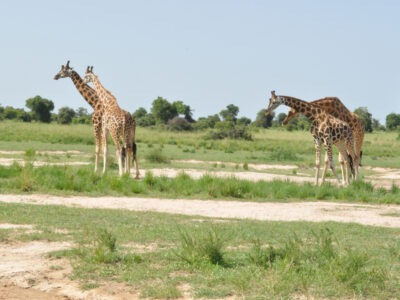
From the comfort of a safari vehicle, visitors can observe a rich tapestry of animal life. Murchison Falls National Park is home to approximately 76 mammal species and 451 bird species. Common sightings during daytime drives include large herds of buffalo, elegant hartebeest, majestic lions, elusive leopards, towering giraffes, and powerful elephants. For a different perspective, night game drives provide a unique chance to encounter nocturnal predators and other creatures, such as lions, leopards, hyenas, bush babies, civets, and genets.
The optimal period for scenic game drives in Murchison Falls is during the dry season, spanning from December to February and June to August. During these months, the vegetation is less dense, the park trails are dry and easily navigable, and the skies are typically clear. These conditions significantly enhance visibility, making it easier to spot wildlife and capture clear photographs. To maximize the viewing and photographic experience, a 4×4 safari vehicle equipped with a pop-up roof is highly recommended. Access to the park is convenient, involving a scenic 305-kilometer road trip northwest from Kampala, Uganda’s capital. The strategic focus on the northern banks for game drives is a critical consideration for visitors.
Queen Elizabeth National Park: Crater Lakes and Tree-Climbing Lions
Queen Elizabeth National Park, designated a UNESCO Biosphere Reserve, presents an incredibly diverse and visually captivating landscape. Its terrain is a rich mosaic of acacia woodlands, expansive grassland plains, vital wetlands, and dense tropical forests. The park spans from Lake George to Lake Edward, extending to the foothills of the majestic Rwenzori Mountains. They provide a dramatic and picturesque backdrop for any scenic drive. A distinctive feature of the park’s scenery is its numerous crater lakes, which add to its unique geological appeal.
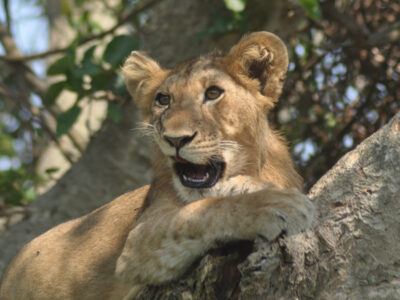
Game drives, the primary mode of scenic exploration, are concentrated in two advantageous regions: that is Kasenyi Plains and the Mweya Peninsula. Both areas are vibrant with wildlife and offer breathtaking views of the park’s varied ecosystems. They include crater lakes, savannah grasslands, and the towering Rwenzori Mountains seen from a distance. Another iconic area, the Ishasha Sector in the park’s southern reaches, is recognized for its unique population of tree-climbing lions. This is a rare and captivating sight that tourists can experience in two countries.
The park is a haven for wildlife enthusiasts, boasting over 95 mammal species and more than 600 bird species. Scenic drives offer exceptional opportunities to spot four of Africa’s “Big Five”—lions, elephants, buffaloes, and leopards—along with a host of other popular animals like hippos, Uganda kob, and warthogs. The presence of crater lakes, savannah grasslands, and the dramatic backdrop of the Rwenzori mountains makes the drive picturesque.
Kidepo Valley National Park: The Untouched Wilderness of the North
Kidepo Valley National Park, nestled in Uganda’s remote northeastern region, is frequently described as the nation’s most isolated yet undeniably magnificent park, often earning the moniker “Masai Mara of Uganda”. This untouched wilderness features a sweeping savannah landscape punctuated by scattered, undulating hills and vibrant grasslands that extend as far as the eye can see.
Game drives are essential activities in Kidepo National Park. They are primarily conducted in two areas: Narus Valley and the Kidepo Valley. The Narus Valley holds significance as it contains permanent water sources. The water source becomes a gathering point for a high concentration of animals during the dry season. Within the Narus Valley, the Katurum track offers particularly magnificent views of the surrounding landscape.
Kidepo National Park is a sanctuary for unique wildlife, boasting approximately 77 mammal species. This includes the “big four”—lions, leopards, buffaloes, and elephants—along with several species found nowhere else in Uganda. These include cheetahs, caracals, greater elands, Gunther’s Dik-Dik, and striped hyenas. The park is also an ornithological paradise, home to around 465 bird species. The park is inhabited by about 20 indigenous people from the Karamoja area, including the impressive ostrich and secretary bird.
While Kidepo’s remote location, approximately 510 kilometers by road from Kampala, might seem challenging, this very isolation is a key aspect of its appeal. Its “isolated” and “least explored” nature translates into an “untouched wilderness” experience. This means fewer crowds and a more authentic safari atmosphere.
Lake Mburo National Park: A Gem of the Western Plains
Lake Mburo National Park, though one of Uganda’s smallest, offers a remarkably diverse and intimate safari experience. Its varied landscapes include expansive open savannahs, dense acacia woodlands, vital wetlands, and picturesque lakeshores. This compact park provides a unique and personal encounter with Uganda’s rich biodiversity.
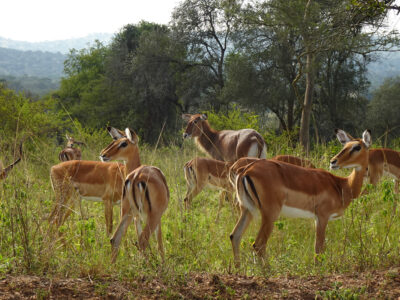
Lake Mburo is particularly distinguished by its thriving population of zebras, whose distinctive stripes create a visually stunning spectacle against the savannah backdrop.11 Beyond zebras, visitors can expect to see large herds of buffalo, elegant impalas, and, with a bit of luck, elusive leopards resting in the treetops.11 The park is also home to unique species such as the striped Topi antelopes, bushbucks, and agile klipspringers scaling rocky outcrops.
This park is ideally suited for a shorter, yet profoundly rewarding, scenic drive experience. Its strategic location, roughly halfway between Kampala and Bwindi Impenetrable National Park, makes it an excellent stopover for travelers embarking on longer journeys to the gorilla highlands. This positioning allows for a seamless integration of a high-quality scenic drive into a broader itinerary.
Lake Mburo’s role as a “great place to break your long journey to Bwindi” signifies its unique value for scenic drives. It offers a quality, yet compact, scenic drive experience that can be seamlessly incorporated into a longer travel plan, serving as a valuable “bonus” scenic drive. The particular prominence of “zebras” as a highlight of Lake Mburo’s scenic drives points to a specialized visual appeal. This is valuable for travelers interested in specific animal photography or those who appreciate the aesthetic of large zebra herds against the savannah, making the drive uniquely photogenic.
Semuliki National Park: Where Central Africa Meets East Africa
Semuliki National Park, established in October 1993, is one of Uganda’s newer national parks and occupies a distinctive ecological position. It is characterized by its unique lowland tropical rainforest, which represents a crucial transition zone where the dense Central African rainforest ecosystem converges with the East African savannah. This ecological convergence creates a rich and varied environment. The park is also renowned for its Sempaya Hot Springs, a notable natural attraction.
Semuliki is widely recognized for its hot springs and extensive hiking trails. Driving through its open savannah grassland areas provides excellent opportunities for game viewing and an immersive experience of the park’s scenic beauty. The drives along the park’s fringes allow visitors to appreciate its diverse landscapes up close.
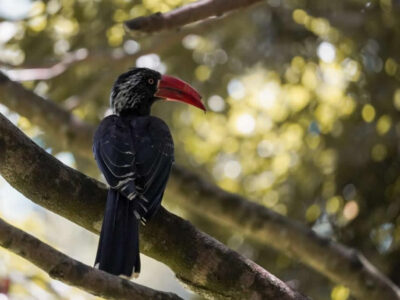
The park is a significant biodiversity hotspot, home to over 200 animal species, including various primates such as chimpanzees and monkeys. It boasts an impressive avian population of over 400 bird species. Several unique species to the Albertine Rift, including the distinctive Nkulengu Rail and various species of hornbills. Along the more forested trails and drivable fringes, primates like red-tailed monkeys, black and white colobus monkeys, and grey-cheeked mangabeys can be observed.
The journey to Semuliki National Park involves a scenic drive through Fort Portal, offering picturesque views of the Rwenzori Mountains and lush tea plantations. Semuliki’s characterization as a meeting point “Where Central Africa Meets East Africa” ( its unique lowland rainforest and Albertine Rift location) provides a compelling narrative for its scenic drives. This ecological uniqueness, bridging two major African biomes, offers a visual journey through distinct shifts in vegetation and atmosphere.
Kibale National Park: The Primate Capital’s Green Corridors
Kibale National Park is recognized as the “Primate Capital” due to its exceptional population of chimpanzees and other primate species. The park’s landscape is defined by its dense, lush tropical forests and gently undulating hills and valleys, creating a rich, green environment.
While Kibale is not primarily a game drive park like the savannah parks, the journey and the exploration of its surrounding areas offer considerable scenic value. The park is conveniently located near the charming town of Fort Portal. A significant highlight for scenic driving is the Crater Lakes Tour area, situated near the park. This region offers picturesque drives with stunning views of vibrant tea plantations and the majestic Rwenzori Mountains.
Crater lakes such as Nyabikere (known as the “Lake of Frogs”), Nkuruba, and Nyinambuga (famously depicted on the 20,000 Uganda Shilling note) offer particularly breathtaking vistas. The Ndali-Kasenda crater lakes area provides panoramic views that encompass the tea estates, the expansive Kibale forest to the East, the Rwenzori Mountains, Lake George, and the vast rift valley plains to the south.
Kibale is home to an impressive 13 primate species, including habituated communities of chimpanzees, red colobus monkeys, L’Hoest’s monkeys, black-and-white colobus monkeys, and blue monkeys.19 The park’s diverse habitats also support various terrestrial mammals like forest elephants and African buffalo.
The focus on the Crater Lakes with its scenic views of tea plantations and the Rwenzori Mountains indicates that the scenic value of driving here is centered on the landscape. The photography, cultural immersion through tea estates, and panoramic views from elevated positions also make the park popular. Kibale’s connection via wildlife corridor to Queen Elizabeth National Park and its accessible routes suggest a broader implication for comprehensive scenic tours.
Bwindi Impenetrable National Park: The Majestic Gorilla Gateway
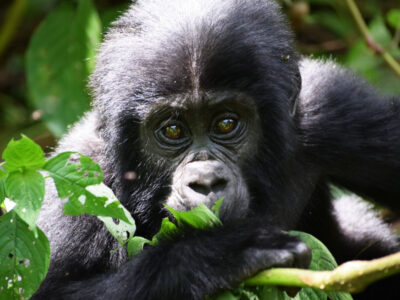
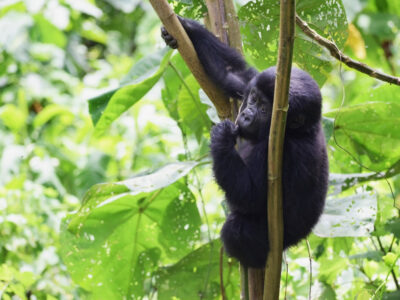
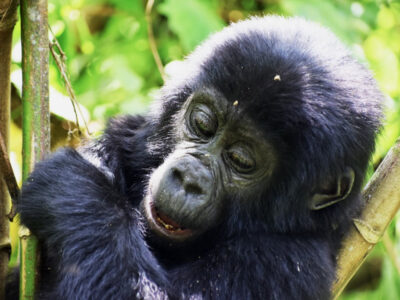
Bwindi Impenetrable National Park, a prestigious UNESCO World Heritage Site, is celebrated as the premier destination for mountain gorilla trekking. While extensive internal drives within the dense forest are not the primary activity, the journey to Bwindi is an exceptionally scenic and rewarding experience.
The park’s name, “Bwindi,” meaning “a place full of darkness.” This describes its characteristic dense foliage, towering giant ferns, and moss-covered tree trunks, which collectively create a rich, earthy, and mystical atmosphere.
The drive from Kampala to Bwindi, spanning approximately 500-550 kilometers and typically taking 7-9 hours, traverses some of Uganda’s most picturesque landscapes.
Key highlights along the route to Bwindi
Lake Mburo National Park: Positioned roughly halfway between Kampala and Bwindi, Lake Mburo is highly recommended as a strategic stopover. It offers opportunities to spot diverse wildlife such as zebra, impala, and various bird species, set against a backdrop of a beautiful lake and serene environment. An overnight stay here is strongly advised for self-guided travelers to break the long drive.
Kabale Town: Known affectionately as the “gateway to Bwindi,” Kabale is a charming town that provides stunning panoramic views of rolling hills and intricately terraced landscapes. It serves as an excellent place for a stopover before venturing into the more rugged terrain leading to Bwindi.
Kigezi Highlands: The journey winds through lush tea plantations, bustling local villages, and the ascending terrain of the Kigezi Highlands, revealing a side of rural Uganda that might otherwise remain unseen.
Mount Elgon National Park: Volcanic Vistas and Highland Beauty
Mount Elgon National Park encompasses an ancient and massive shield volcano, distinguished by one of the world’s largest intact calderas, an impressive 8 kilometers wide, located near its summit. The park’s geography is a rich and varied tapestry of natural formations, including extensive cave systems, dramatic gorges, cascading waterfalls, and therapeutic hot springs.
While Mount Elgon is primarily renowned for its hiking and mountaineering destinations, the drives leading to and around its various trailheads offer significant scenic beauty. The journey from Kampala, approximately 235 kilometers (4-5 hours), typically passes through Jinja and Mbale towns. The roads that lead to popular trailheads such as Sipi, Bushiyi, Sasa, and Piswa provide unique and evolving views of the landscape. The Chelulus circuit, in particular, is noted as an excellent location to observe the park’s lush montane forest.
As one ascends the mountain, the vegetation undergoes a striking transformation. Moving through dense montane forests, mixed bamboo groves, and distinct Podocarpus zones. The overall landscape is frequently described as unique and unlike anything previously encountered.