Chimpanzee tracking in Bugoma Forest
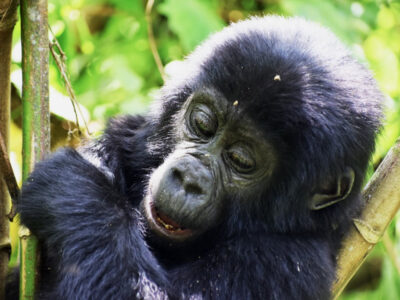
Chimpanzee tracking in Bugoma Forest. This forest reserve is home to approximately 500 chimpanzees, and on record, it boasts over 221 different bird species, making it a popular location for birdwatchers. Covering an area of 41,144 hectares, it was gazetted in 1932 and later declared protected by the National Forestry Authority in 2003.
In Western Uganda, this tropical rainforest is overseen by the National Forestry Authority. It is situated on the eastern shore of Lake Albert in Hoima District, the northeastern side of Kyenjojo Town, and the southwest side of Hoima District. It was formally opened for chimpanzee trekking on August 15, 2024. Each chimpanzee tracking permit costs USD 80 per person.
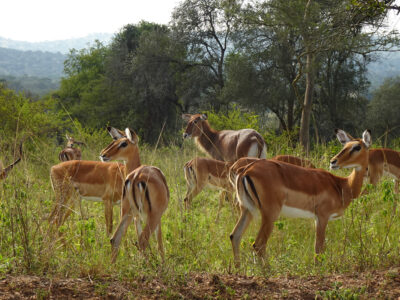
There are other primates, such as red-tailed monkeys, blue monkeys, black-and-white colobus monkeys, and the Endangered Ugandan Mangabey monkeys. It’s also on rare occasions that you might spot a few Uganda Kobs, Cape buffaloes, and bush elephants.
Chimpanzee tracking in Bugoma Forest offers a more intimate and less-crowded experience compared to more established destinations like Kibale National Park. While Bugoma’s primates live in a relatively pristine and off-the-beaten-path environment.
Bugoma Forest is a protected tropical rainforest located in western Uganda, situated southwest of Hoima town and east of Lake Albert. Covering an area of approximately 40,100 to 41,144 hectares, it is one of the country’s most significant and biodiverse forests. It was officially gazetted as a forest reserve in 1932 and is managed by the National Forestry Authority
Key Features and Biodiversity that define Bugoma forest
Vegetation: The forest is characterized as a medium-altitude, semi-deciduous forest. A significant portion is dominated by the Uganda ironwood trees, locally known as “Muhimbi.” Other notable tree species include Alstonia congensis, Khaya anthotheca, and many others. The forest is also a critical water catchment area, with several small rivers like the Sonso, Rubwa, and Waisoke draining into Lake Albert.
Wildlife: Bugoma is a haven for a variety of species. It is home to an estimated population of over 600 chimpanzees, making it a major site for chimpanzee conservation. Other primates found here include the endangered Uganda Mangabey, as well as grey-cheeked Mangabey, black-and-white Colobus monkeys, red-tailed monkeys, and blue monkeys. The forest also hosts a diversity of mammals such as elephants, buffalo, golden cats, and side-striped jackals.
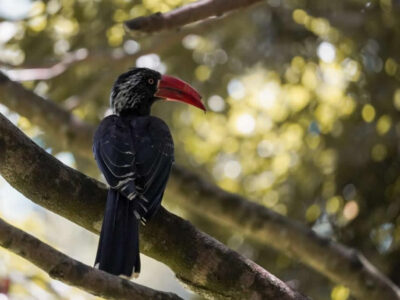
Bird Life: For bird lovers, Bugoma is a paradise with over 225 species recorded. It is important for its population of Guinea-Congo Biome species. Two globally threatened bird species, Nahan’s partridge and the black-eared ground thrush, are also found within the reserve.
What to Experience
Briefing and Preparation: The day begins with a briefing at the ecotourism main office, often at the Bugoma Jungle Lodge or a similar location. An experienced conservation ranger guide(s) from the National Forestry Authority will provide an overview of the forest. This includes the chimpanzee communities and the rules and regulations to follow for tracking. The briefing covers safety precautions and what to expect in the jungle tracking chimps, as well as how to behave.
During the Trek: Led by a knowledgeable guide and a tracker, you will venture into the dense forest. The terrain in Bugoma forest is flat compared to Kibale forest and Bwindi Impenetrable forest, making the trek less demanding. The time spent while trekking varies depending on the chimps’ location, but it can range from 30 minutes to 5 hours. The guides use their knowledge of chimpanzee behavior, feeding trails, and vocalizations to locate the communities.
Encountering the Chimps: Once the chimpanzees are found, you are allowed one hour to observe them. This is a crucial conservation measure to minimize disturbance and stress on the animals. During this time, you can witness them engaging in their daily activities, such as playing, feeding, grooming, foraging, and vocalization.
Beyond Chimpanzees: Besides chimpanzees in the forest, the trek itself is a full nature walk, offering the chance to see other primates, such as the endangered Uganda Mangabey, black-and-white Colobus monkeys, Vervet monkeys, and red-tailed monkeys. The forest is also a prime bird-watching destination, with over 225 species, and you may encounter other mammals and a wide variety of flora.
Practical Information
Permits: A chimpanzee trakking permit is required for the activity. As of 2025, the cost for a foreign non-resident is approximately $80 USD per person. This permit grants you one hour with the chimpanzees. It’s advisable to book your permit in advance through a tour operator to ensure availability.
Best Time to Visit
Chimpanzee trekking in Budongo forest can be done all year round. The Dry Season (June-August and December-February) is generally considered the best time. The forest trails are drier, less slippery, and more accessible. With less foliage, visibility is often better, and the chimps tend to be more active.
Wet Season (March-May and September-November): While the trails can be muddy and challenging, the forest is lush and vibrant. Chimpanzees may be easier to find during this time as there is abundant food, so they don’t have to travel far to forage. This season also offers the advantage of fewer tourists.
What to Pack
Sturdy, comfortable hiking boots with good grip.
Long-sleeved shirt and trousers to protect against stinging nettles and insects.
A light waterproof jacket or poncho.
A hat and sunglasses.
Insect repellent and sun-screen.
A camera with a good zoom lens (flash photography is prohibited).
Sufficient drinking water and a few light snacks.
A small backpack to carry your essentials.
Coclusion
By choosing to track chimpanzees in Bugoma Forest, you are directly contributing to the conservation of this critical habitat.
The revenue collected from permits and tourism helps fund anti-poaching patrols, community sensitization programs, and general forest management. This helps to reduce and eliminate forest threats.